Brick vs AAC Block – Which Is Better for Modern House Construction?
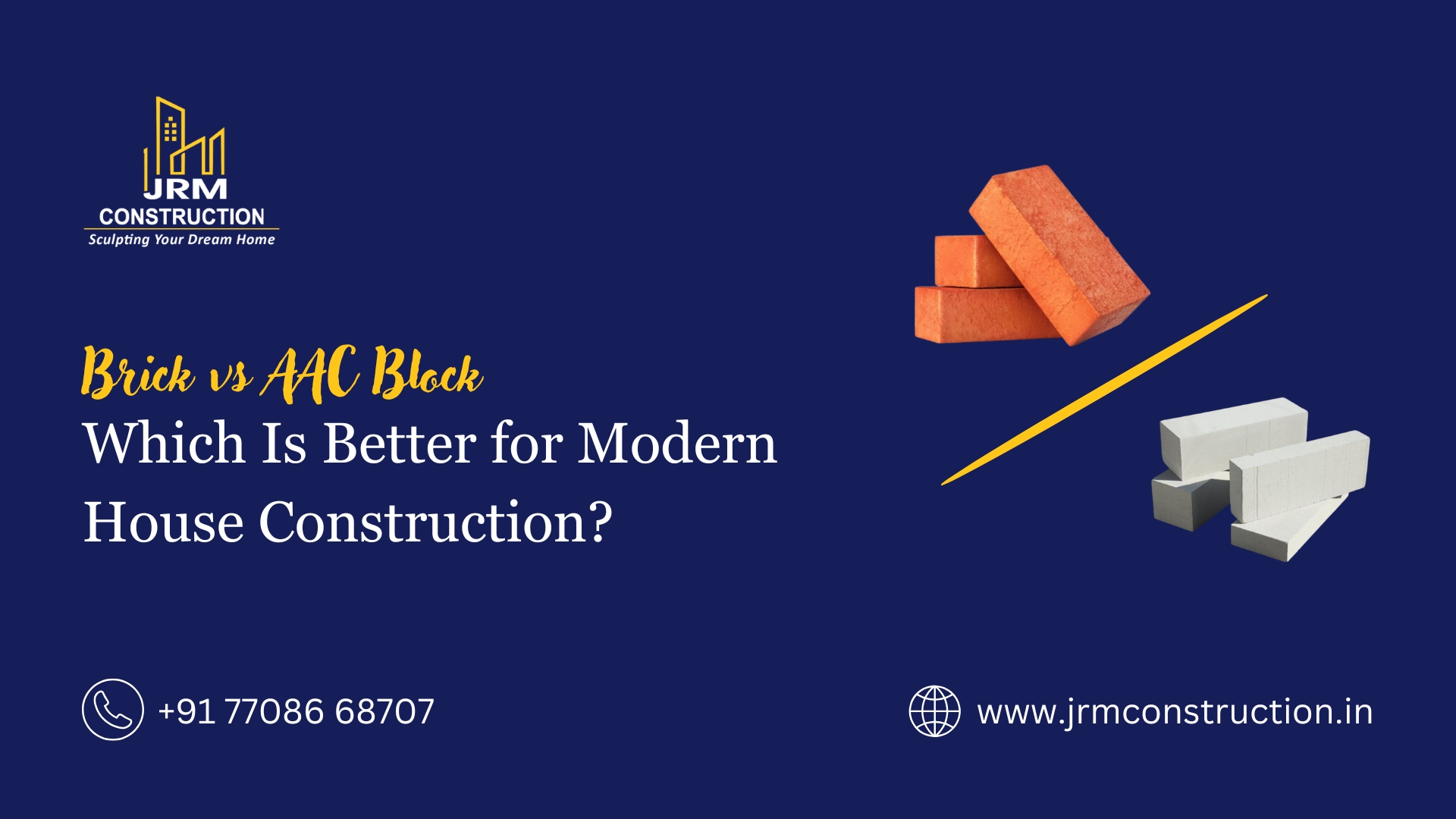
A Complete Comparison Guide for Stronger, Smarter Homes
Choosing the right wall material is one of the most important decisions in house construction. Traditionally, red clay bricks have been widely used, but modern construction is increasingly shifting toward AAC (Autoclaved Aerated Concrete) blocks due to their lightweight structure and energy efficiency. Many homeowners are confused about which option is better for durability, cost, and long-term performance.
JRM Construction helps clients understand the differences between brick masonry and AAC block construction so they can make informed choices based on design needs, climate conditions, and budget.
1. What Are Traditional Clay Bricks?
Clay bricks are made from natural soil and fired in kilns. They have been used in construction for decades due to their strength and familiarity.
Advantages of Bricks
High compressive strength
Easily available materials
Skilled labour widely available
Traditional and proven construction method
Limitations
Heavier weight increases structural load
Requires more mortar during construction
Higher heat absorption compared to AAC blocks
Bricks are still suitable for many residential projects, especially where traditional construction methods are preferred.
2. What Are AAC Blocks?
AAC blocks are lightweight precast building materials made from cement, lime, sand, and aluminium powder. They contain tiny air pockets, making them lighter and more thermally efficient.
Advantages of AAC Blocks
Lightweight structure reduces foundation load
Better thermal insulation for hot climates
Faster construction due to larger block size
Smooth surface reduces plastering thickness
AAC blocks are becoming popular in modern urban construction due to their efficiency and sustainability.
3. Brick vs AAC Block – Key Differences
Weight and Structural Load
Bricks: Heavier, increasing dead load on structure
AAC Blocks: Lightweight, reducing structural stress
Construction Speed
Bricks: Smaller size requires more labour time
AAC Blocks: Larger size allows faster wall construction
Thermal Insulation
Bricks: Absorb and retain more heat
AAC Blocks: Better insulation, helping keep interiors cooler
Cost Consideration
Bricks: Lower initial material cost
AAC Blocks: May reduce overall cost due to faster labour and less plaster
Sustainability
Bricks: Higher environmental impact due to kiln firing
AAC Blocks: Considered more eco-friendly
JRM Construction evaluates these factors before recommending materials for each project.
4. Which Material Is Better for Chennai’s Climate?
In hot and humid climates, wall materials should help maintain indoor comfort.
AAC blocks often perform better because:
They reduce heat transfer into interiors
Require less energy for cooling
Improve long-term energy efficiency
However, bricks may still be preferred for certain structural designs or budget-focused projects.
5. When Should You Choose Bricks?
Bricks may be suitable when:
Traditional construction is preferred
Labour familiarity is important
Structural design demands higher density materials
They remain a reliable option for many residential buildings.
6. When Should You Choose AAC Blocks?
AAC blocks are ideal when:
Faster construction timelines are required
Energy-efficient homes are a priority
Modern architectural designs are planned
Many contemporary homes now use AAC blocks for internal and external walls.
How JRM Construction Helps You Decide
JRM Construction considers multiple factors before selecting wall materials:
Structural design and load calculations
Climate responsiveness
Budget planning
Long-term durability and maintenance
This balanced approach ensures homes remain strong, efficient, and future-ready.
Advantages of Choosing the Right Wall Material
Better thermal comfort indoors
Improved construction efficiency
Reduced long-term maintenance
Enhanced structural performance
Higher overall property value
Conclusion – There Is No One-Size-Fits-All Choice
Both bricks and AAC blocks have their strengths, and the right choice depends on project goals, design style, and environmental conditions. Modern homes are increasingly adopting AAC blocks for their lightweight and energy-efficient properties, while bricks continue to offer traditional reliability.
JRM Construction helps homeowners in Chennai select the most suitable materials by combining engineering expertise with practical construction experience — ensuring every home is built with the right foundation and wall system.
Share this article
Related Articles

How to Choose the Right Construction Company in Chennai
IntroductionBuilding a house is one of the biggest financial and emotional investments for families in Chennai. Yet, many homeowners rush the most critical deci...

Step-by-Step Guide to Planning Your Dream House in Chennai
IntroductionPlanning a house is exciting — and this is exactly where most homeowners in Chennai make costly mistakes.They finalize designs before budgets, choos...

Individual House Construction in Chennai: What Most Owners Miss
IntroductionIndividual house construction in Chennai is often seen as a symbol of independence, comfort, and long-term security. But behind many beautifully des...