How Passive Cooling Reduces Electricity Bills in Modern Homes
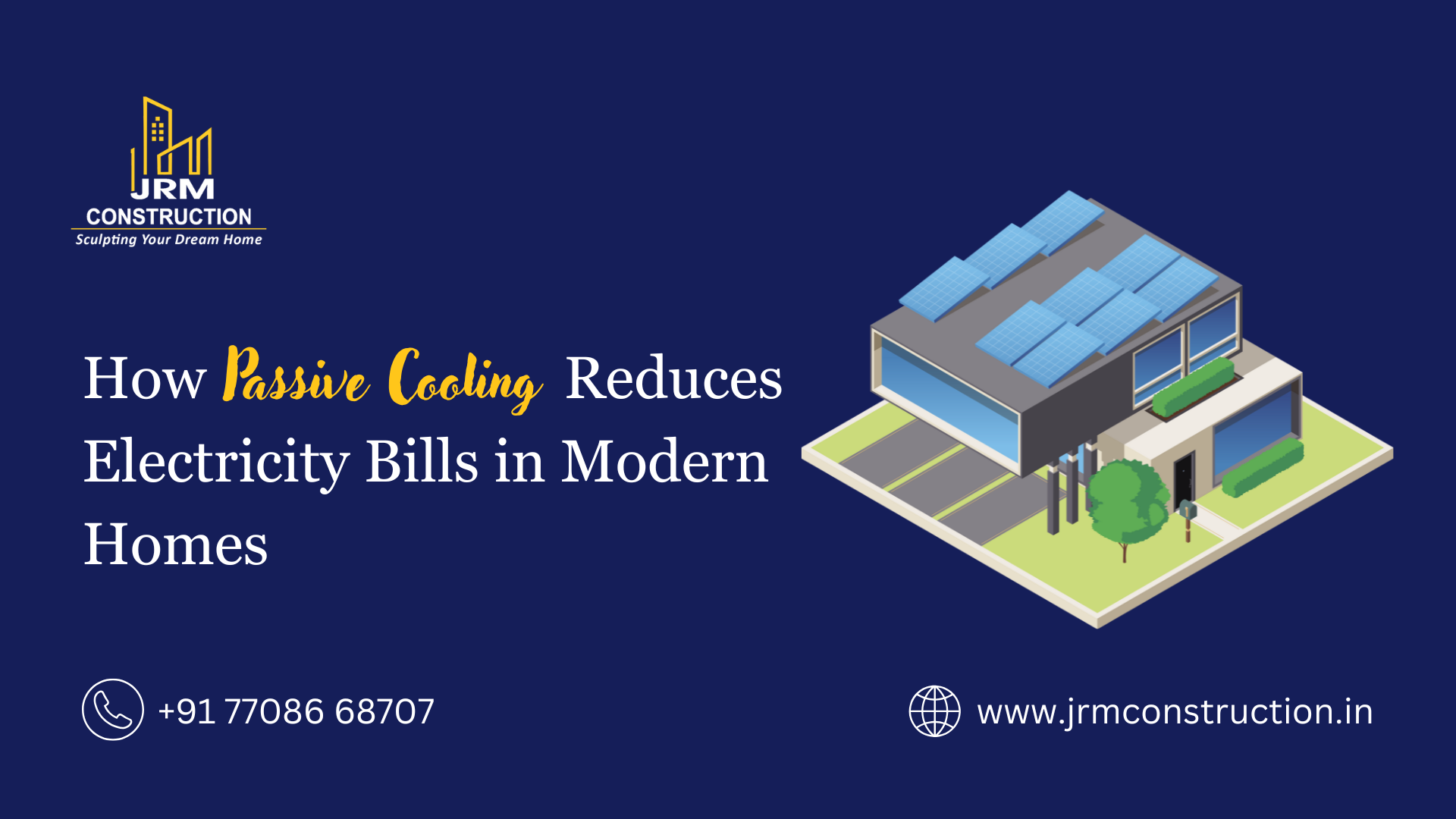
Energy-Efficient House Construction in Chennai
With rising electricity costs and increasing temperatures in Chennai, homeowners are looking for smarter ways to keep their houses cool without depending heavily on-air conditioning. One of the most effective solutions is passive cooling, a construction approach that uses natural design strategies to maintain comfortable indoor temperatures.
JRM Construction focuses on integrating passive cooling techniques into modern and traditional home designs, helping homeowners reduce electricity consumption while creating sustainable living spaces. This blog explains how passive cooling works and why it is becoming an essential part of energy-efficient house construction in Chennai.

1. What is Passive Cooling in Home Construction?
Passive cooling refers to architectural and structural design methods that reduce indoor heat gain and improve natural airflow without relying on mechanical systems. Instead of using energy-intensive cooling equipment, the building itself is designed to stay cooler through smart planning.
Common passive cooling strategies include:
Proper building orientation
Cross ventilation design
High ceilings and open layouts
Shaded windows and verandas
Thermal insulation through wall thickness
Construction companies in Chennai are increasingly adopting these techniques to create homes that are comfortable, eco-friendly, and cost-efficient with standard package.

2. Why Passive Cooling is Important for Chennai’s Climate
Chennai experiences hot and humid weather for most of the year. Many modern houses trap heat due to poor ventilation and compact layouts, which increases dependence on air conditioners.
Passive cooling helps by:
Reducing indoor temperature naturally
Improving airflow across rooms
Minimizing heat absorption from walls and roofs
JRM Construction carefully plans home layouts to suit local climatic conditions, ensuring that houses remain cooler even during peak summer months.
3. How Passive Cooling Reduces Electricity Bills
One of the biggest advantages of passive cooling is long-term cost savings. When homes are designed to stay naturally cool, the need for air conditioning decreases significantly.
Lower AC Usage
Strategic window placement and cross ventilation reduce the need for continuous AC operation, which is one of the highest contributors to electricity bills.
Reduced Heat Gain
Features like shaded balconies, courtyards, and roof insulation prevent excessive heat from entering the building, keeping interiors comfortable without extra energy consumption.
Efficient Daylighting
Natural lighting reduces dependency on artificial lights during daytime, further lowering electricity usage.
Homeowners who invest in passive cooling during construction often experience noticeable savings on monthly energy costs.

4. Passive Cooling Techniques Used by JRM Construction
As a residential construction company in Chennai , they integrates traditional design principles with modern engineering to achieve effective passive cooling.
Building Orientation
Homes are positioned to minimize direct heat exposure and maximize natural airflow.
Courtyard Design
Inspired by traditional South Indian architecture, central courtyards allow hot air to rise and escape, improving ventilation.
High Ceilings and Ventilated Roofs
Higher ceiling heights help disperse heat, making rooms feel cooler without additional energy usage.
Shading Elements
Verandas, pergolas, and window projections reduce direct sunlight entering the house.

5. Passive Cooling vs Air Conditioning – Long-Term Benefits
While air conditioning provides instant cooling, it also increases electricity bills and maintenance costs. Passive cooling offers long-term advantages:
Lower monthly energy expenses
Reduced environmental impact
Better indoor air quality
Increased property value due to sustainable design.
Many homeowners in Chennai are now choosing energy-efficient house construction that combines passive cooling with minimal mechanical cooling systems.
6. Sustainable Living Through Smart Construction Planning
Passive cooling is not just a design trend — it is a practical solution for future-ready homes. By incorporating climate-responsive architecture during the construction stage, homeowners can enjoy comfort without excessive energy consumption.
JRM Construction ensures that passive cooling strategies are included during the planning phase itself, allowing clients to benefit from sustainable construction without increasing overall project complexity.
Advantages of Passive Cooling in Residential Construction
Reduces electricity bills and energy consumption
Maintains natural indoor comfort
Supports eco-friendly living
Minimizes reliance on artificial cooling systems
Enhances long-term property value
Ideal for Chennai’s hot climate conditions.

Conclusion – Build Smarter, Save Energy
Passive cooling is one of the most effective ways to design homes that are both comfortable and cost-efficient. Instead of relying solely on technology, smart architectural planning allows houses to stay naturally cool while reducing electricity expenses.
JRM Construction combines modern engineering practices with climate-responsive design to create homes that are energy-efficient, sustainable, and built for long-term performance. For homeowners planning to build in Chennai, integrating passive cooling during construction is a smart investment that delivers both environmental and financial benefits.
Share this article
Related Articles
How to Choose the Right Construction Company in Chennai
IntroductionBuilding a house is one of the biggest financial and emotional investments for families in Chennai. Yet, many homeowners rush the most critical deci...

Step-by-Step Guide to Planning Your Dream House in Chennai
IntroductionPlanning a house is exciting — and this is exactly where most homeowners in Chennai make costly mistakes.They finalize designs before budgets, choos...

Individual House Construction in Chennai: What Most Owners Miss
IntroductionIndividual house construction in Chennai is often seen as a symbol of independence, comfort, and long-term security. But behind many beautifully des...