How to Avoid Cracks in Buildings During and After Construction
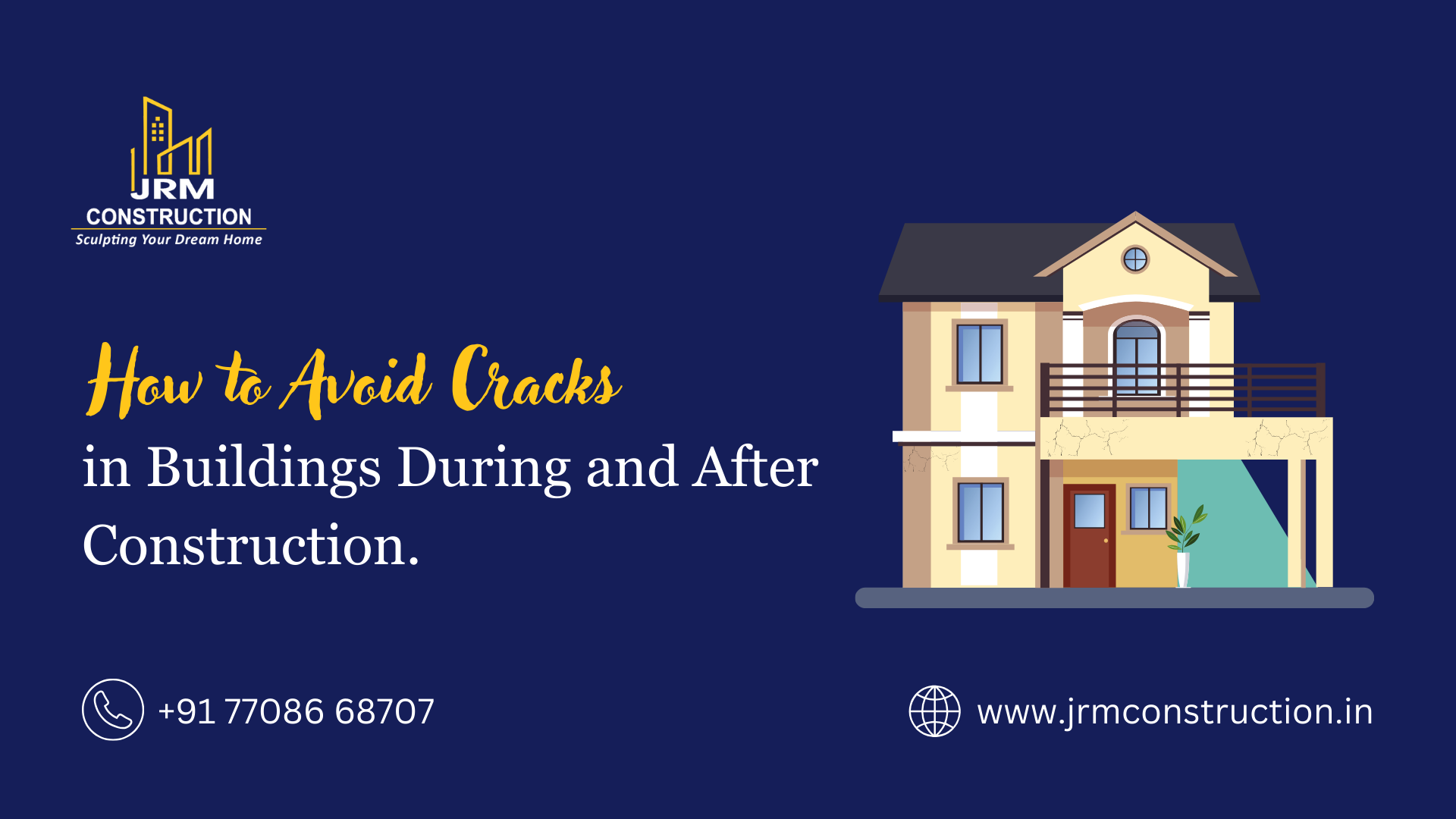
Structural Safety Tips for Long-Lasting Homes
Cracks in buildings are one of the most common concerns among homeowners, especially when they appear within a few years of construction. While some cracks are minor, others can indicate serious structural or construction-related issues. The good news is that most building cracks are preventable with proper planning, material selection, and execution.
JRM Construction focuses on quality-driven construction practices to ensure long-lasting, crack-resistant homes. This blog explains the main causes of cracks and how homeowners can avoid them during and after construction.

1. Conduct Proper Soil Testing Before Construction
Soil condition plays a critical role in building stability. Uneven or weak soil can lead to differential settlement, which causes cracks in foundations and walls.
To avoid this:
Conduct a soil test before designing the foundation
Choose foundation type based on soil bearing capacity
Avoid standard foundation designs for all plots
Proper soil investigation ensures the structure is designed to handle ground conditions safely.
2. Use Correct Foundation Design and Depth
Inadequate foundation depth or improper design is a major cause of structural cracks.
Best practices include:
Designing foundation as per structural calculations
Maintaining required footing depth
Avoiding shortcuts during excavation and concreting
A strong foundation distributes loads evenly and prevents settlement-related cracks.
3. Maintain Proper Concrete Mix and Curing
Poor concrete quality is a leading cause of early cracks.
Common mistakes:
Incorrect water-cement ratio
Inadequate mixing
Insufficient curing period
Proper curing keeps concrete moist and allows it to gain strength gradually, reducing shrinkage cracks significantly.

4. Follow Correct Reinforcement Detailing
Incorrect reinforcement placement or insufficient steel can weaken structural elements.
To prevent cracks:
Use structural drawings approved by engineers
Maintain correct bar spacing and cover
Avoid bending or cutting reinforcement improperly
Accurate reinforcement detailing improves load resistance and crack control.
5. Allow Controlled Construction Joints
Concrete naturally expands and contracts due to temperature changes. Without proper joints, random cracks may form.
Key measures:
Provide expansion and control joints where required
Avoid large uninterrupted concrete surfaces
Follow recommended joint spacing
These joints allow movement without damaging the structure.
6. Avoid Overloading the Structure
Adding extra floors or heavy loads without structural design can lead to serious cracks.
Always:
Plan future floors during initial design
Avoid unauthorized modifications
Consult a structural engineer before alterations
Load planning ensures the building can safely handle stress over time.

7. Protect the Building from Water Seepage
Water penetration weakens concrete and reinforcement, leading to cracks and corrosion.
Preventive steps:
Proper waterproofing for roofs and toilets
Adequate drainage around the building
Regular maintenance of plumbing lines
Keeping moisture out significantly improves building life.
8. Use Quality Construction Materials
Low-quality materials reduce structural strength and durability.
Always ensure:
Standard-grade cement and steel
Proper storage of materials at site
Avoiding expired or substandard products
Quality materials directly influence crack resistance.
How JRM Construction Prevents Cracks in Buildings
JRM Construction follows a process-driven approach to reduce cracking risks.
This includes:
Soil-based foundation design
Engineer-supervised construction
Quality-controlled material usage
Proper curing and waterproofing practices
These measures ensure structurally stable and long-lasting homes.
Advantages of Crack-Resistant Construction
Improved structural safety
Reduced maintenance costs
Longer building lifespan
Better resale value
Peace of mind for homeowners
Conclusion – Build Strong, Build Smart
Cracks in buildings are often the result of poor planning, rushed construction, or low-quality execution. By following proper engineering practices and quality standards, these issues can be avoided effectively.
JRM Construction helps homeowners build durable, crack-resistant homes in Chennai through transparent planning, professional supervision, and quality-focused construction methods.
Share this article
Related Articles
How to Choose the Right Construction Company in Chennai
IntroductionBuilding a house is one of the biggest financial and emotional investments for families in Chennai. Yet, many homeowners rush the most critical deci...
Step-by-Step Guide to Planning Your Dream House in Chennai
IntroductionPlanning a house is exciting — and this is exactly where most homeowners in Chennai make costly mistakes.They finalize designs before budgets, choos...
Individual House Construction in Chennai: What Most Owners Miss
IntroductionIndividual house construction in Chennai is often seen as a symbol of independence, comfort, and long-term security. But behind many beautifully des...