How to Choose the Right Water Sump Tank for Your House Construction
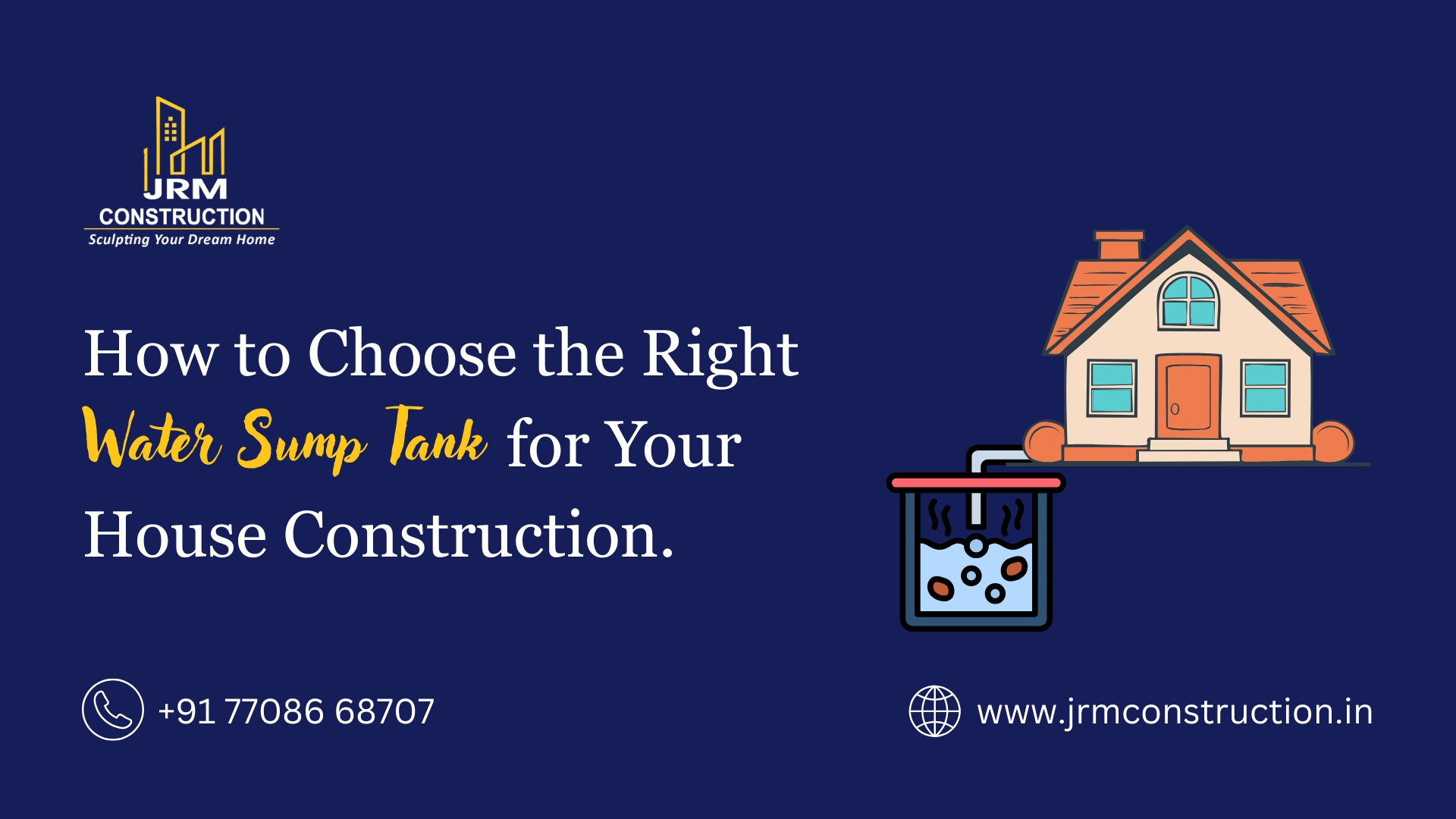
Capacity, Placement, and Planning Guide for Modern Homes
A water sump tank is one of the most important components of residential infrastructure, yet many homeowners overlook proper planning during construction. Choosing the right sump size and design ensures efficient water storage, smooth daily usage, and long-term durability. In cities like Chennai, where water supply may vary, a well-designed sump tank becomes essential for uninterrupted living.
JRM Construction helps homeowners plan sump tanks strategically by considering water demand, plot size, and structural safety during the early construction stages.

1. What Is a Sump Tank and Why Is It Important?
A sump tank is an underground water storage system used to collect and store municipal or tanker water before it is pumped to overhead tanks. It acts as the main storage point for household water supply.
Benefits of a properly designed sump:
Continuous water availability
Efficient water management
Reduced dependency on direct supply timing
Better pressure control for plumbing systems
2. How to Decide the Right Sump Tank Capacity
Sump capacity depends mainly on family size and daily water usage.
General estimation guidelines:
Small family (3–4 members): 6000–8000 litres
Medium family (5–6 members): 8000–12000 litres
Large houses or villas: 12000 litres and above
Planning adequate capacity prevents frequent tanker refilling and ensures convenience.
3. Ideal Location for Sump Tank Placement
Placement plays a major role in structural safety and ease of maintenance.
Common planning considerations:
Usually placed near the compound wall or driveway
Avoiding locations directly under heavy load-bearing columns
Maintaining proper access for cleaning and repairs
Ensuring proximity to water inlet connections
JRM Construction ensures sump placement aligns with structural drawings and plumbing layout.
4. Material and Construction Considerations
A well-built sump tank should be durable, leak-proof, and easy to maintain.
Important features include:
Reinforced concrete structure
Proper waterproofing treatment
Smooth internal plastering
Adequate ventilation and inspection covers
Quality construction prevents seepage and contamination.
5. Sump Tank and Vastu Considerations
Many homeowners prefer Vastu-compliant water storage planning.
Common guidelines suggest:
North-east placement for water storage where possible
Avoiding central areas of the plot
Ensuring balanced site planning
However, structural safety and practicality should always come first.
6. Maintenance Tips for Long-Term Performance
Regular maintenance keeps water clean and prevents damage.
Recommended practices:
Cleaning sump tank every 6–12 months
Checking for cracks or leakage
Maintaining proper drainage around the sump
Installing filters to prevent debris entry
7. How JRM Construction Plans Sump Tanks Efficiently
JRM Construction integrates sump planning with overall building design by:
Calculating water demand accurately
Coordinating plumbing and electrical layouts
Ensuring safe structural placement
Providing cost-effective and durable construction solutions
This approach ensures long-term performance without future modifications.
Advantages of a Well-Planned Sump Tank
Reliable water storage system
Reduced maintenance and leakage risks
Better plumbing efficiency
Improved property value
Sustainable water management
Conclusion – Smart Water Storage Starts with Proper Planning
A correctly designed sump tank plays a vital role in everyday comfort and efficient water management. Planning the right size, location, and construction method during the building stage helps avoid future issues and ensures long-lasting performance.
JRM Construction supports homeowners in Chennai with thoughtful infrastructure planning, ensuring every home is functional, durable, and ready for modern living.
Share this article
Related Articles
How to Choose the Right Construction Company in Chennai
IntroductionBuilding a house is one of the biggest financial and emotional investments for families in Chennai. Yet, many homeowners rush the most critical deci...

Step-by-Step Guide to Planning Your Dream House in Chennai
IntroductionPlanning a house is exciting — and this is exactly where most homeowners in Chennai make costly mistakes.They finalize designs before budgets, choos...
Individual House Construction in Chennai: What Most Owners Miss
IntroductionIndividual house construction in Chennai is often seen as a symbol of independence, comfort, and long-term security. But behind many beautifully des...