What Is FSI (Floor Space Index) and How It Affects House Construction
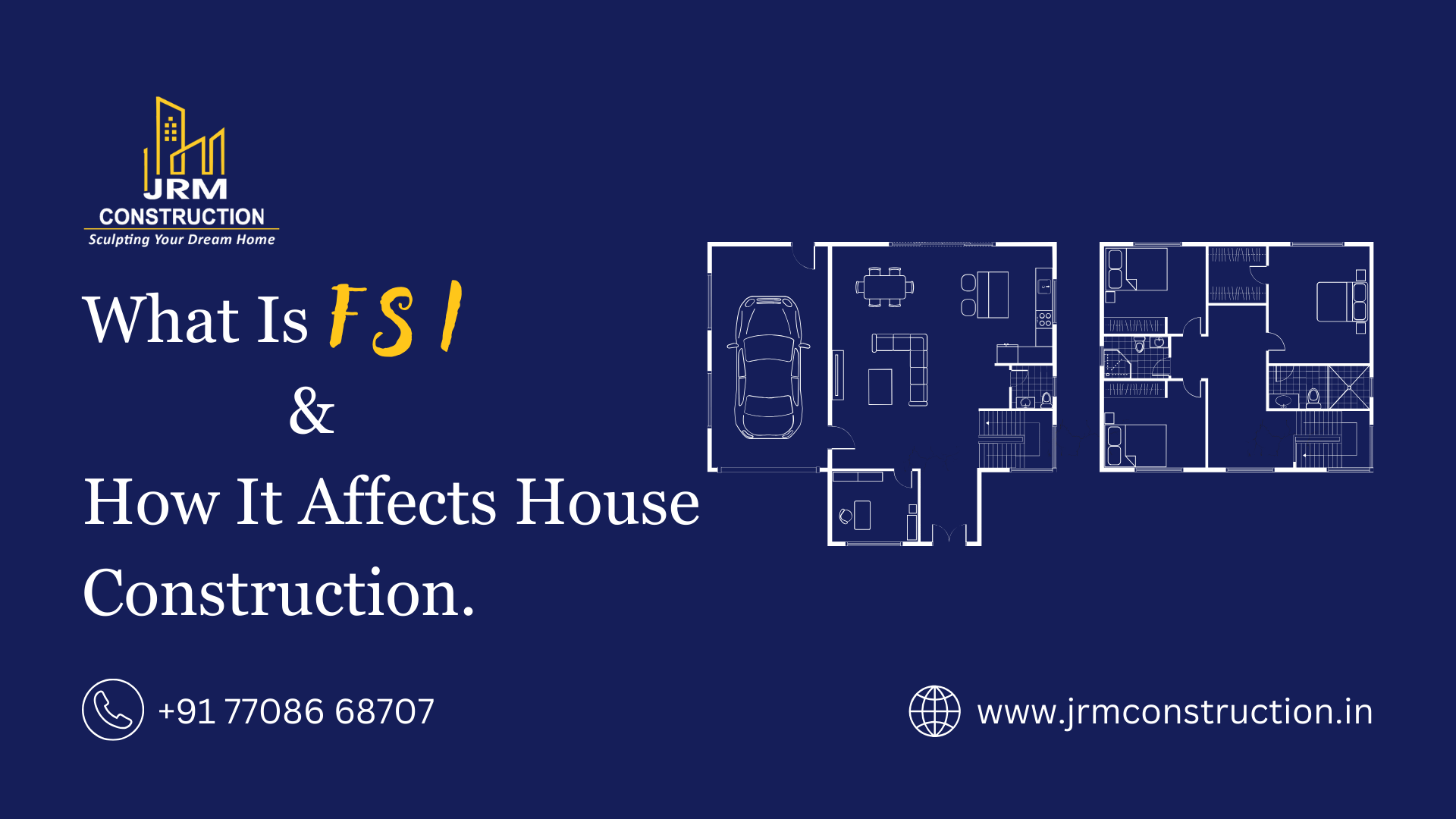
A Simple Guide to FSI Rules for Homeowners in Chennai
When planning a house or building in Chennai, one of the most important planning terms you’ll come across is FSI (Floor Space Index). Many homeowners hear this term during plan approval or design discussions but are unsure what it actually means and how it impacts construction.
JRM Construction believes that understanding basic planning regulations like FSI helps homeowners make smarter design and budgeting decisions. This blog explains what FSI is, how it is calculated, and why it matters in house construction.
1. What Is FSI?
FSI (Floor Space Index), also known as FAR (Floor Area Ratio), defines how much built-up area is allowed on a plot of land. It controls the total construction area based on plot size and local development regulations.
In simple terms, FSI decides:
How many floors you can build
How much total area you are allowed to construct
Whether vertical expansion is possible
FSI regulations are governed by planning authorities such as CMDA and local bodies.
2. How Is FSI Calculated?
FSI is calculated using a simple formula:
FSI = Total Built-Up Area ÷ Plot Area
Example:
Plot area: 1200 sq ft
Permissible FSI: 1.5
Allowed built-up area = 1200 × 1.5 = 1800 sq ft
This 1800 sq ft can be distributed across one or multiple floors, subject to approval rules.
3. Why FSI Is Important in House Construction
FSI directly impacts your house design and construction planning.
It affects:
Number of floors allowed
Room sizes and layout
Staircase and lift planning
Future expansion possibilities
Ignoring FSI rules can lead to approval rejection or legal issues later.
4. Factors That Influence FSI Value
FSI is not the same for every plot. It depends on several factors, including:
Road width adjacent to the plot
Plot location (city, suburban, or outskirts)
Zoning classification
Type of building (residential or commercial)
Wider roads usually allow higher FSI compared to narrow streets.
5. Difference Between FSI and Plinth Area
Many homeowners confuse FSI with construction area.
FSI controls total permissible built-up area
Plinth area is used for cost calculation
Carpet area shows actual usable space
Understanding these differences helps in realistic budgeting and design expectations.
6. Can FSI Be Increased?
In some cases, additional FSI may be allowed based on:
Premium FSI regulations
Special development zones
Government policy changes
However, these options depend on local authority rules and must be approved legally.
7. How JRM Construction Helps with FSI Planning
JRM Construction supports homeowners by:
Verifying permissible FSI before design
Coordinating with architects for compliant layouts
Ensuring approval-ready drawings
Avoiding over-construction risks
This ensures smooth approvals and stress-free construction.
Advantages of Understanding FSI Before Construction
Avoids plan approval rejection
Helps optimize space planning
Prevents legal complications
Improves resale and property value
Enables smarter long-term planning
Conclusion – Plan Smart by Understanding FSI
FSI plays a major role in shaping how your house is designed and constructed. Knowing the permissible limits early helps homeowners plan better layouts, avoid legal issues, and maximize usable space efficiently.
JRM Construction helps clients in Chennai navigate FSI regulations with clarity and transparency, ensuring every home is planned legally, efficiently, and intelligently.
Share this article
Related Articles

How to Choose the Right Construction Company in Chennai
IntroductionBuilding a house is one of the biggest financial and emotional investments for families in Chennai. Yet, many homeowners rush the most critical deci...

Step-by-Step Guide to Planning Your Dream House in Chennai
IntroductionPlanning a house is exciting — and this is exactly where most homeowners in Chennai make costly mistakes.They finalize designs before budgets, choos...

Individual House Construction in Chennai: What Most Owners Miss
IntroductionIndividual house construction in Chennai is often seen as a symbol of independence, comfort, and long-term security. But behind many beautifully des...