Why Does Honeycombing Happen in Concrete and How Can I Avoid It?
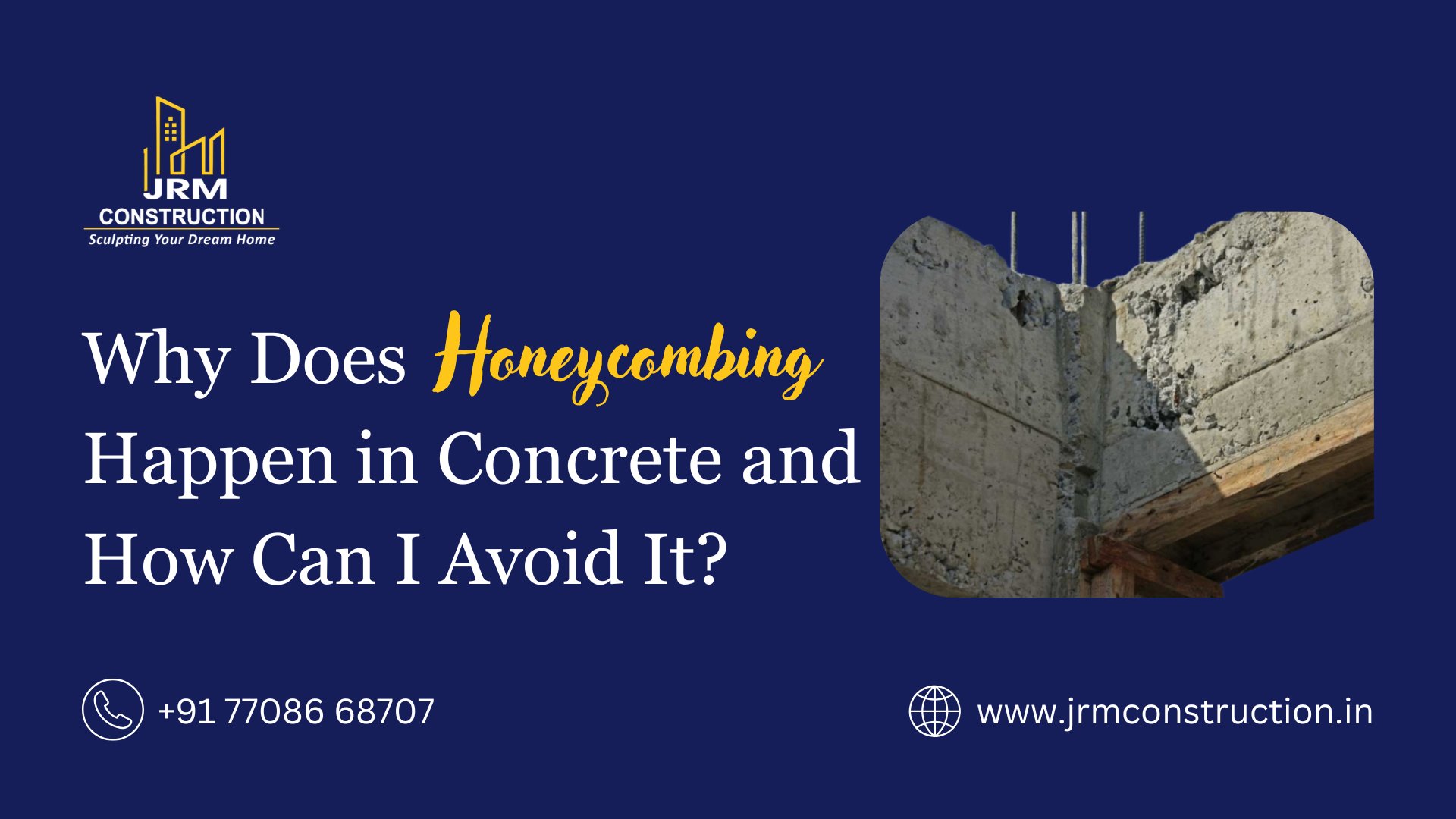
Honeycombing in concrete is one of the most common quality issues seen in residential and commercial buildings. It weakens structural strength, exposes steel reinforcement, and reduces the life of a building. Reputed construction firms in Chennai treat honeycombing as a serious defect—not a cosmetic issue.
This blog explains why honeycombing happens and how professional builders prevent it.
What Is Honeycombing in Concrete?
Honeycombing refers to voids or cavities left in hardened concrete where cement mortar fails to fill gaps between aggregates. These holes resemble a honeycomb pattern and are usually visible after shuttering removal.
Experienced Chennai builders consider honeycombing a sign of poor construction control.
Main Reasons Honeycombing Happens
1. Poor Concrete Mix Design
Incorrect ratio of cement, sand, aggregates, and water leads to low workability. Many unorganized builders compromise mix quality, unlike certified best building contractors in Chennai who follow IS standards.
2. Improper Compaction
Lack of vibration during concreting is a primary cause. Manual compaction or rushed pouring often creates air pockets.
Professional builders in Chennai for individual house projects use needle vibrators at every pour level.
3. Congested Reinforcement
Closely spaced steel bars block concrete flow. This is common in beams and columns of residential structures.
Trusted best home builders redesign bar spacing to ensure proper concrete coverage.
4. Low Workability Concrete
Dry or stiff concrete cannot flow into corners of shuttering. This problem is often seen in low-cost construction without supervision.
5. Poor Formwork Quality
Leaky or misaligned shuttering causes cement slurry loss, leaving behind voids.
Top construction firms in Chennai use rigid, sealed formwork systems.
Why Honeycombing Is Dangerous
Reduces load-bearing capacity
Exposes reinforcement to corrosion
Causes water seepage
Leads to costly repairs later
This is why residential construction in ECR zones requires extra care due to coastal moisture and salt exposure.
How JRM Construction Prevents Honeycombing
As one of the disciplined construction firms in Chennai, JRM Construction follows strict quality controls:
Site-tested concrete mix design
Mechanical vibration at every pour
Proper bar spacing and cover blocks
Quality shuttering with zero leakage
Continuous site supervision
This approach is why JRM is trusted among best building contractors in Chennai for individual houses.
Can Honeycombing Be Repaired?
Minor honeycombing can be repaired using:
Polymer-modified mortar
Micro concrete
Pressure grouting
However, severe honeycombing affects structural safety and must be avoided during construction—not fixed later.
Final Thoughts
Honeycombing is not “normal” or “acceptable.” It is a construction defect caused by poor practices. Choosing experienced Chennai builders like JRM Construction ensures structural safety, durability, and long-term value.
If you are planning a home with reliable builders in Chennai for individual house projects, quality control should never be compromised.
Share this article
Related Articles

How to Choose the Right Construction Company in Chennai
IntroductionBuilding a house is one of the biggest financial and emotional investments for families in Chennai. Yet, many homeowners rush the most critical deci...

Step-by-Step Guide to Planning Your Dream House in Chennai
IntroductionPlanning a house is exciting — and this is exactly where most homeowners in Chennai make costly mistakes.They finalize designs before budgets, choos...

Individual House Construction in Chennai: What Most Owners Miss
IntroductionIndividual house construction in Chennai is often seen as a symbol of independence, comfort, and long-term security. But behind many beautifully des...