Old House Renovation: What Should You Fix First?

Renovating an old house can quickly become expensive when every problem is treated as an immediate priority. A better approach is to identify the issues that affect the home's safety, structure, functionality, and long-term durability before spending heavily on cosmetic improvements.
For homeowners planning Home Renovation in Chennai, this order becomes even more important. Older properties may have ageing plumbing, electrical systems, waterproofing issues, damaged finishes, or layouts that no longer suit modern lifestyles. Fixing the visible problems first may make the house look better, but it does not always solve what is happening underneath.
A well-planned renovation starts with the condition of the property and then moves towards design and aesthetics. Here is a practical order to consider.
1. Start With a Property Assessment
Before removing walls, replacing flooring, or choosing new interiors, understand the current condition of the house.
An assessment should look at areas such as:
Structural condition
Walls and ceilings
Flooring
Plumbing
Electrical systems
Waterproofing
Doors and windows
Ventilation
Existing layout
This first step helps identify problems that may not be obvious during a normal walk-through.
For example, a fresh coat of paint will not solve moisture damage caused by an underlying waterproofing problem. Similarly, new flooring may need to wait if the existing floor or plumbing beneath it requires attention.
2. Address Structural Problems First
Structural issues should take priority over cosmetic improvements.
Cracks, damaged slabs, weakened structural elements, or signs of settlement require proper assessment before renovation work continues. Not every crack indicates a serious structural problem, but homeowners should avoid assuming that all cracks are merely cosmetic.
If structural changes are planned, such as removing walls or modifying openings, the existing building should be evaluated before work begins.
Solving these concerns first creates a safer foundation for the rest of the renovation.
3. Fix Water Leakage and Waterproofing Issues
Water-related problems can damage finishes and create recurring maintenance issues if they are covered instead of corrected.
Look for signs such as:
Damp patches on walls
Peeling paint
Ceiling stains
Mould or persistent moisture
Bathroom seepage
Terrace leakage
Water damage near plumbing areas
In Chennai, heavy rainfall during the monsoon makes effective waterproofing particularly important.
If waterproofing is required, it should be addressed before final painting, flooring, false ceilings, or other finish work.
4. Review Old Plumbing and Electrical Systems
Older homes may contain plumbing and electrical infrastructure that was designed for a different level of daily usage.
Before closing walls or installing new finishes, check whether existing systems are suitable for the renovated home.
Consider:
Water supply lines
Drainage pipes
Electrical wiring
Switch and socket locations
Distribution boards
Additional appliance requirements
Kitchen and bathroom plumbing
This is especially important when renovating kitchens, bathrooms, or multiple rooms simultaneously.
Replacing or modifying concealed services during renovation can be considerably more practical than reopening finished surfaces later.
5. Improve the Layout and Space Planning
Once major condition-related problems are understood, look at how the home actually functions.
Ask:
Are rooms being used efficiently?
Is there enough storage?
Does the kitchen have a practical workflow?
Are bedrooms providing sufficient privacy?
Is natural light reaching the main living spaces?
Are there unnecessary partitions?
Is movement between rooms convenient?
A renovation provides an opportunity to improve the way the house works—not simply how it looks.
However, any major layout modification should consider the existing structure and building requirements before execution.
6. Upgrade Kitchens and Bathrooms
Kitchens and bathrooms are often among the most valuable areas to renovate because they combine functionality, plumbing, storage, lighting, and finishes.
A kitchen renovation may involve:
Improved storage
New cabinets
Better countertop planning
Updated plumbing
Appliance integration
Improved lighting
Bathroom improvements may include:
New sanitary fixtures
Better ventilation
Updated plumbing
Waterproofing
New tiles
Improved storage
Planning these elements together helps avoid conflicts between design and essential services.
7. Move to Flooring, Walls, Ceilings and Finishes
Once the major functional work is complete, you can focus on the visual transformation.
This may include:
Flooring
Wall finishes
Painting
False ceilings
Lighting
Doors
Wardrobes
Decorative elements
This stage is where the overall character of the renovated home begins to take shape.
Choosing finishes after the functional requirements are settled also makes it easier to control the budget and avoid rework.
8. Plan the Renovation Budget in the Right Order
A common renovation mistake is allocating too much of the budget to visible finishes while leaving insufficient funds for essential work.
A practical priority is:
Structure → Waterproofing → Plumbing & Electrical → Layout → Kitchens & Bathrooms → Finishes → Decorative upgrades
The exact allocation will depend on the property's condition and renovation scope.
It is also sensible to keep some budget flexibility for unexpected issues discovered after demolition or during repair work, particularly in older homes.
What Should You Avoid During an Old House Renovation?
Renovation can become unnecessarily expensive when decisions are made without considering the entire property.
Avoid:
Starting demolition without a clear scope
Covering dampness with paint
Removing walls without structural assessment
Choosing finishes before solving infrastructure problems
Replacing only visible sections of ageing systems
Making frequent design changes during construction
Selecting materials based only on appearance
Good renovation planning is not about spending more. It is about spending in the right order.
Why Choose JRM Construction for Home Renovation?
At JRM Construction, renovation planning begins with understanding the existing property and the homeowner's requirements.
Rather than treating every renovation as a cosmetic makeover, we consider the relationship between the home's structure, layout, services, materials, and final design.
Our approach can include:
Existing property assessment
Renovation planning and space improvement
Structural and construction coordination
Kitchen and bathroom renovation
Waterproofing considerations
Plumbing and electrical coordination
Material and finish planning
Overall residential design integration
For homeowners looking for Home Renovation, this integrated approach helps create a renovation plan that addresses essential problems while improving the appearance and functionality of the property.
Final Verdict
When renovating an old house, what you fix first matters as much as what you choose to install.
Structural concerns, water-related problems, plumbing, electrical systems, and layout should generally be addressed before moving on to finishes and decorative improvements.
A renovation becomes more effective when the focus is not simply on making an old house look new, but on making it work better, last longer, and suit the people living in it.
If your existing home needs more than a cosmetic makeover, JRM Construction can help you plan the renovation from the underlying requirements through to the final residential finishes.
Planning to renovate an old house in Chennai?
Speak with JRM Construction to discuss your house renovation requirements.
Share this article
Related Articles
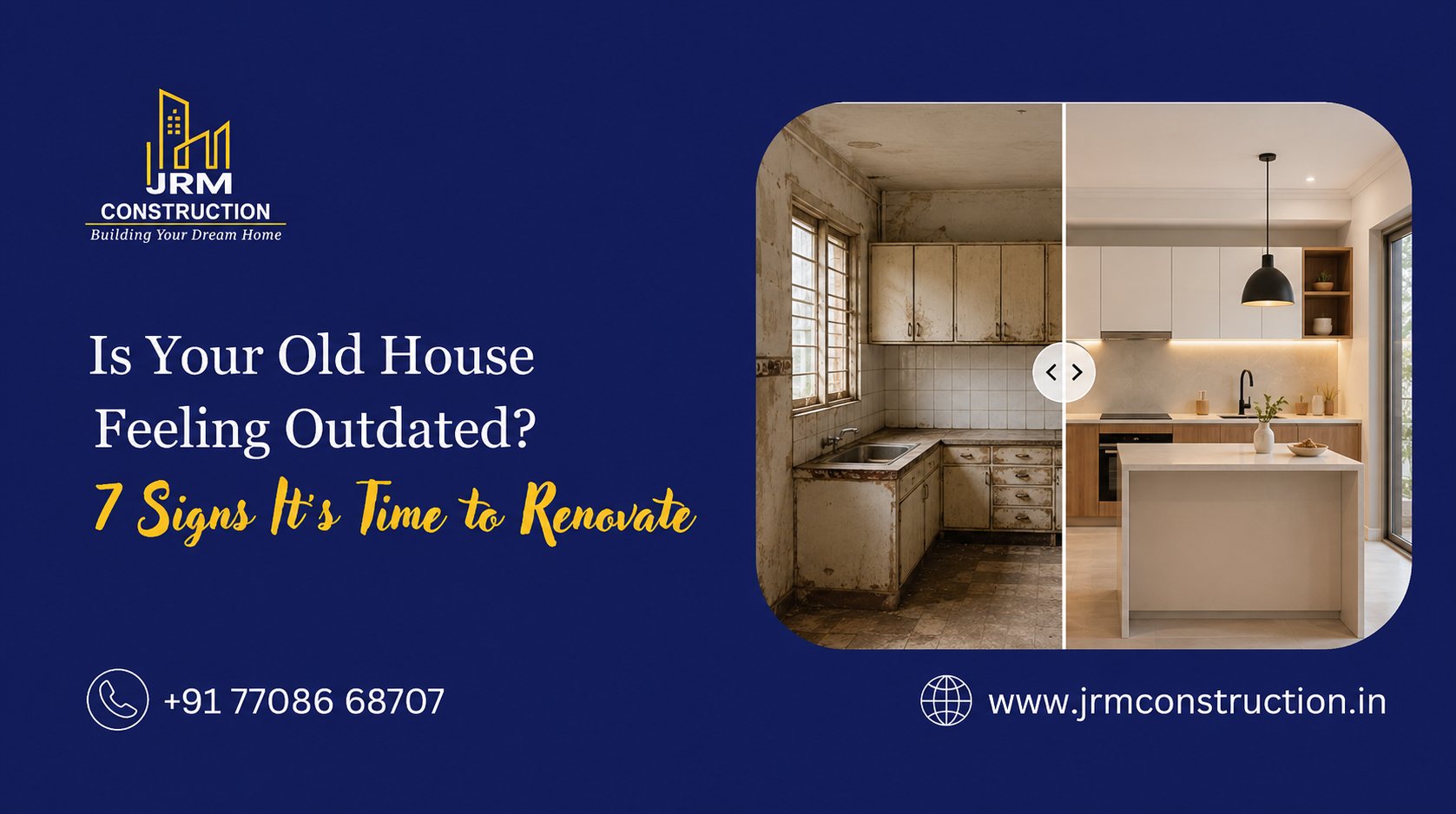
Is Your Old House Feeling Outdated? 7 Signs It’s Time to Renovate
An older home does not always need to be demolished and rebuilt. In many cases, the right renovation can improve how the house looks, functions, and feels witho...

Planning a Home Renovation in Chennai? Don’t Start Before Reading This
Planning a Home Renovation in Chennai? Don’t Start Before Reading ThisRenovating a home can look simple at first. Change the flooring, update the kitchen, repai...