Planning a Home Renovation in Chennai? Don’t Start Before Reading This

Planning a Home Renovation in Chennai? Don’t Start Before Reading This
Renovating a home can look simple at first. Change the flooring, update the kitchen, repaint the walls, improve the interiors - and the house should feel new again. But once the work begins, homeowners often discover that renovation involves much more than replacing finishes.
Old electrical lines, plumbing issues, structural concerns, poor space planning, outdated layouts and unexpected repair work can quickly affect the budget and timeline.
That is why choosing a Home Renovation service in Chennai should not be the first step. The first step is understanding what your home actually needs, what can be retained, and what should be redesigned or repaired.
A well-planned renovation can improve the way your home looks, functions and feels without unnecessarily changing everything.
Why Should You Plan Before Starting a Home Renovation?
One of the most common renovation mistakes is starting the work before deciding the complete scope.
For example, a homeowner may initially plan to renovate the kitchen. Once the flooring is removed, damaged plumbing may be discovered. Later, electrical points may need to be relocated. Then the existing storage may no longer suit the redesigned kitchen.
A small renovation can suddenly become a much larger project.
Planning helps identify these requirements before work begins.
A proper renovation plan should consider:
Existing condition of the property
Structural requirements
Electrical and plumbing systems
Space planning
Flooring and wall finishes
Kitchen and storage requirements
Lighting and ventilation
Interior design
Budget and project priorities
Expected timeline
The goal is not simply to make the house look newer. It is to make the home work better for the people living in it.
What Should You Check Before Renovating an Old Home?
Before discussing designs and finishes, assess the existing property.
1. Check the Structural Condition
Cracks, dampness, damaged slabs, weakened walls or other visible issues should not be covered up simply because they affect the appearance.
If there are structural concerns, they should be assessed before cosmetic renovation work begins.
2. Inspect Plumbing and Electrical Systems
Older homes may have plumbing and electrical systems that no longer suit modern requirements.
If you are opening walls or changing the kitchen and bathrooms, it can be more practical to inspect these systems at the planning stage rather than discovering problems after the renovation is underway.
3. Review the Existing Layout
Sometimes the biggest problem is not the condition of the house but the way the spaces are arranged.
Ask:
Are rooms being used efficiently?
Is there enough storage?
Does the kitchen layout work well?
Are the bathrooms positioned conveniently?
Is natural light reaching the important areas?
Does the circulation between rooms feel comfortable?
A renovation gives you an opportunity to address these issues instead of simply applying new finishes to an old layout.
Do You Need a Complete Renovation or Only Selected Upgrades?
Not every home requires a complete transformation.
This is an important decision because unnecessary renovation can increase both cost and disruption.
A home may only need improvements to selected areas such as:
Kitchen
Bathrooms
Flooring
Electrical systems
Plumbing
False ceiling and lighting
Storage
Interior finishes
Doors and windows
Exterior elevation
On the other hand, an older property with several interconnected issues may benefit from a more comprehensive renovation.
The right approach depends on the property's condition, the homeowner's requirements and the intended outcome.
How Do You Avoid Unexpected Renovation Costs?
Budget overruns often happen when the scope of work is not clearly defined.
For example, a homeowner may budget for new flooring without considering demolition, disposal, surface preparation, skirting, electrical changes or other related work.
Before work starts, divide the renovation into clear categories.
Consider These Cost Areas
Repair and preparation:
Existing damage, demolition, waterproofing and surface preparation.
Civil work:
Changes to walls, flooring, bathrooms, kitchen areas and other spaces.
Electrical and plumbing:
New points, rewiring, pipework and fixture requirements where necessary.
Interiors:
Storage, wardrobes, kitchen units, lighting, finishes and other interior elements.
Materials and finishes:
Tiles, flooring, sanitaryware, fittings, paint, hardware and other selected materials.
A clear scope makes it easier to understand where the budget is going and reduces surprises during execution.
How Can You Choose the Right Renovation Partner?
Price should not be the only factor when selecting a renovation company.
A renovation involves multiple decisions and several stages of work. Poor coordination between different contractors can result in delays, inconsistent workmanship and changes that were not part of the original plan.
When evaluating a Home Renovation service in Chennai, look at how the company approaches the complete project.
Consider whether they can handle or coordinate:
Design and space planning
Structural requirements
Civil work
Electrical and plumbing
Interior planning
Material selection
Project execution
Quality checks
Final handover
It is also useful to ask for a clear scope of work, project timeline, material specifications and payment schedule before proceeding.
What Makes a Renovation Successful?
A successful renovation is not only about how the finished home looks.
It should also improve how the home functions.
For example, a well-planned renovation might:
Create better storage without making rooms feel smaller
Improve natural light and ventilation
Make kitchen movement more practical
Modernise outdated bathrooms
Improve electrical convenience
Resolve recurring maintenance issues
Make better use of unused areas
Create a more cohesive interior
The best renovation decisions are therefore based on how the family uses the home, rather than simply following current design trends.
When Should You Start Planning?
Do not wait until you are ready to break the first wall.
Start by documenting what is not working in the home.
Walk through each room and make a list:
What needs repair?
Identify visible and recurring problems.
What needs improvement?
Consider storage, lighting, ventilation and functionality.
What should change?
Decide which spaces need a new layout or purpose.
What should remain?
Not everything needs to be replaced.
What is the priority?
Separate essential work from aesthetic upgrades.
This simple exercise can make the discussion with your renovation team much more productive.
A Better Way to Approach Home Renovation
Home renovation should be treated as a planned project rather than a collection of individual repair jobs.
At JRM Construction, we look at the property as a whole - from planning and architectural requirements to structural considerations, interiors and execution.
The objective is to create a renovation plan that is practical for the existing property and aligned with how the homeowners want to use their space.
Whether the requirement involves selected upgrades or a more comprehensive transformation, the right planning helps bring clarity to the scope, budget and execution process.
Conclusion
A home renovation can solve much more than an outdated appearance. It can address inefficient spaces, recurring maintenance issues, outdated systems and changing family requirements.
But the result depends heavily on what happens before the renovation begins.
Understand the existing property. Define what needs to change. Set realistic priorities. Review the scope carefully. And choose a team that can manage the project with proper planning and coordination.
If you are considering a Home Renovation service in Chennai, JRM Construction can help you evaluate your requirements and plan the renovation around your home, lifestyle and priorities.
Planning a renovation? Speak with JRM Construction to discuss your requirements and explore the right approach for your home.
Share this article
Related Articles
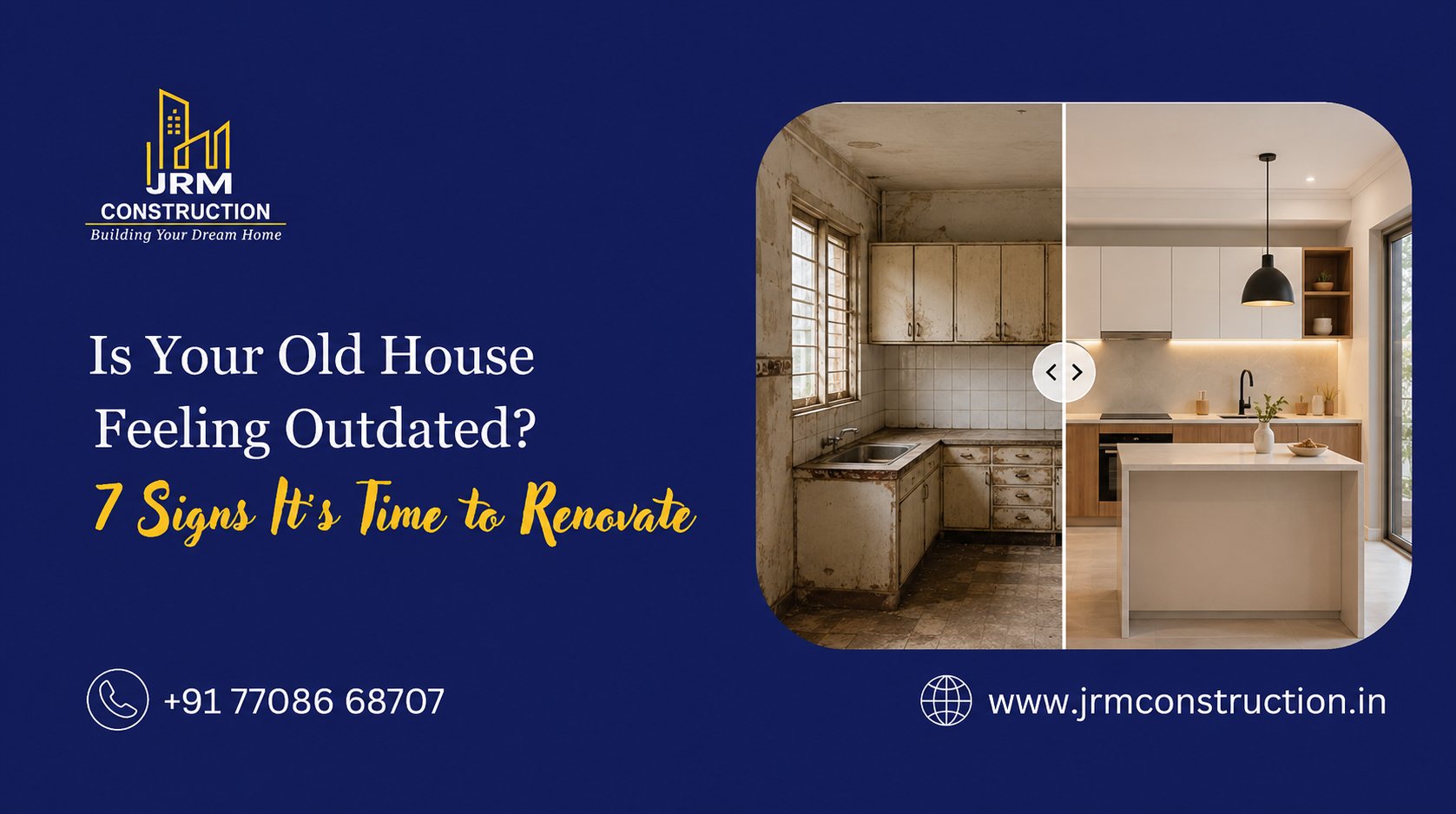
Is Your Old House Feeling Outdated? 7 Signs It’s Time to Renovate
An older home does not always need to be demolished and rebuilt. In many cases, the right renovation can improve how the house looks, functions, and feels witho...

Old House Renovation: What Should You Fix First?
Renovating an old house can quickly become expensive when every problem is treated as an immediate priority. A better approach is to identify the issues that af...