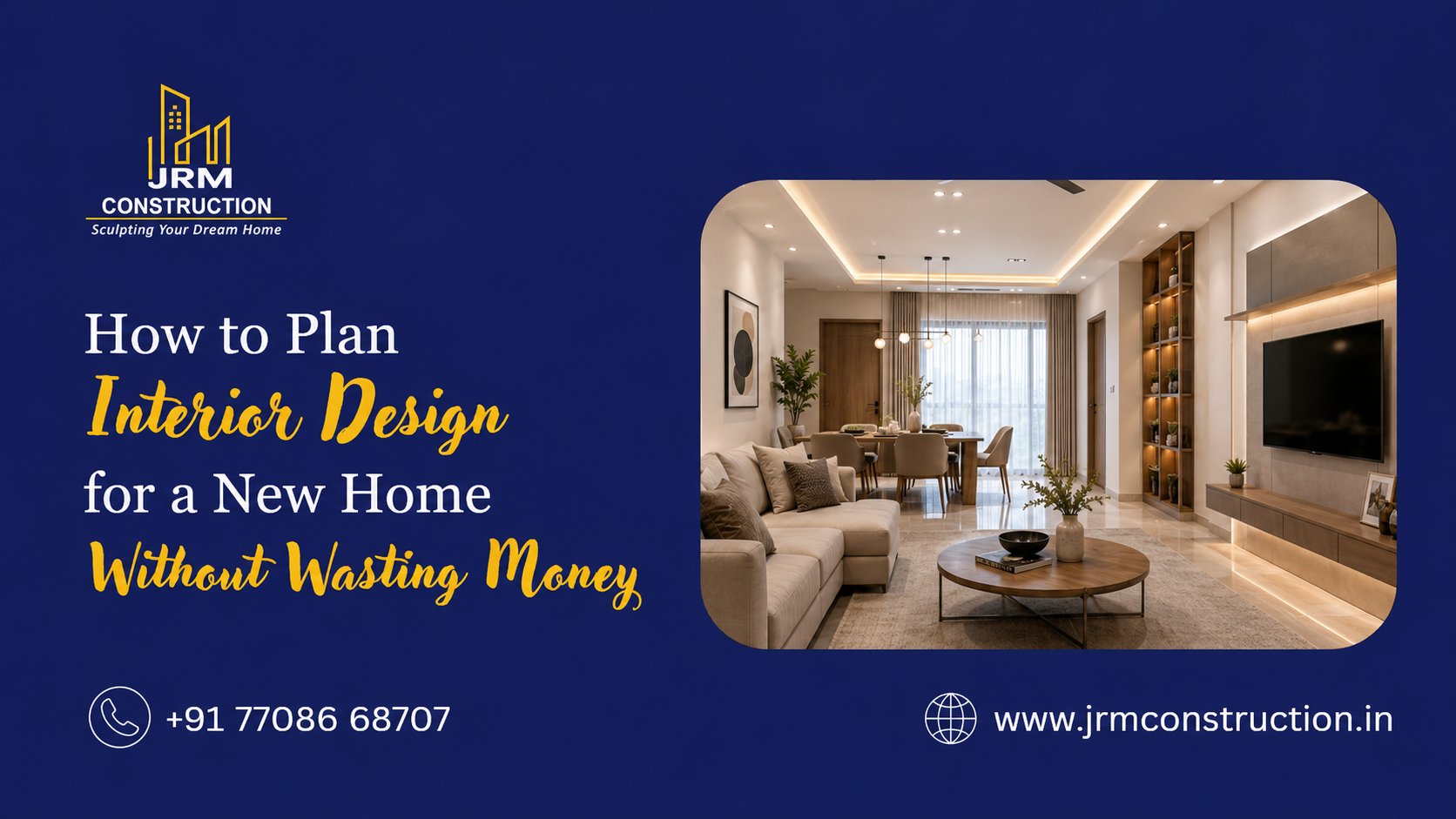
How to Plan Interior Design for a New Home Without Wasting Money !
Introduction
Moving into a new home is exciting, but interior work can quickly become expensive when decisions are made without a proper plan. Homeowners often start with furniture, colours, or decorative elements before deciding how the space should actually function. This can lead to unnecessary purchases, design changes, and additional costs later.
A well-planned interior design in Chennai should begin with the home's layout, lifestyle, storage requirements, materials, and budget - not just the appearance of each room. Whether you are building a new villa or an independent house, planning the interiors alongside the construction process can help you avoid costly changes.
This guide explains how to plan your interiors practically while creating a home that looks refined, functions well, and stays within a realistic budget.
Start With the Floor Plan Before Buying Anything
One of the most common mistakes is purchasing furniture before understanding how it will fit into the finished space.
Before buying anything, review:
Room dimensions
Door and window positions
Electrical points
Plumbing locations
Furniture placement
Walking space
Storage requirements
For example, a large sofa may look attractive in a showroom but leave very little circulation space in your living room.
Planning furniture layouts early helps you understand what each room actually needs before money is spent.
Set an Interior Budget Before Choosing Materials
Interior costs can increase quickly when homeowners select materials and finishes without setting priorities.
Instead of having one overall budget, divide it into categories such as:
Kitchen
Wardrobes and storage
Living room furniture
Bedrooms
Lighting
False ceiling
Flooring and wall finishes
Curtains and soft furnishings
Decorative elements
Then identify where you want to invest more and where you can choose practical alternatives.
For a luxury home, spending more on high-use areas such as the kitchen, wardrobes, hardware, and lighting can often make more sense than overspending on purely decorative features.
Prioritise Storage During the Design Stage
Insufficient storage is one of the problems homeowners often notice only after moving in.
Think about what needs to be stored in each room before finalising the design.
For example:
Kitchen: Appliances, groceries, cookware and serving items
Bedroom: Clothes, luggage, accessories and personal belongings
Living room: Books, electronics, documents and everyday items
Entrance: Footwear, bags, keys and frequently used accessories
Planning storage according to actual usage prevents the home from becoming cluttered and reduces the need for additional furniture later.
Don't Choose Materials Based Only on Appearance
A material can look excellent in a sample and still be unsuitable for everyday use.
Before selecting materials, consider:
Durability
Maintenance
Moisture resistance
Cleaning requirements
Hardware quality
Expected lifespan
Availability of replacement parts
This is particularly important for kitchens and bathrooms, where moisture, heat, frequent cleaning, and daily usage can affect finishes over time.
A slightly higher initial investment in the right material can sometimes prevent replacement or repair expenses later.
Plan Electrical and Lighting Requirements Early
Changing electrical points after the interiors are completed can be inconvenient and expensive.
Before finalising the design, identify the locations of:
TV and entertainment systems
Refrigerators and kitchen appliances
Work-from-home equipment
Bedside charging points
Decorative lighting
Task lighting
Air conditioners
Smart-home devices
Lighting should also be planned according to how each space will be used.
A living room may need ambient lighting for general use, task lighting for specific activities, and accent lighting to highlight architectural or decorative features.
Avoid Over designing Every Room
Trying to make every room look like a showroom can increase the budget without necessarily improving the home.
Instead, create a visual hierarchy.
You might make the living room more detailed while keeping bedrooms calmer and more functional. Similarly, a feature wall or statement lighting can create visual interest without adding expensive design elements throughout the entire house.
A balanced interior usually feels more refined than a space where every wall, ceiling, and piece of furniture competes for attention.
Plan Interiors Alongside Home Construction
For a new home, one of the most effective ways to reduce unnecessary changes is to coordinate architectural, electrical, plumbing, and interior requirements before construction is completed.
For example, the position of a kitchen island affects electrical points. A wardrobe layout can influence switches and sockets. Ceiling designs can affect lighting locations, while bathroom interiors need to work with plumbing and waterproofing requirements.
This is where integrated planning becomes valuable.
At JRM Construction, we approach luxury residential projects by considering the relationship between the home's architecture, construction, and interior requirements. Planning these elements together can reduce coordination issues and help homeowners make decisions before expensive changes become necessary.
Where Should You Spend More on Interiors?
Not every element needs the same budget allocation.
Consider prioritising quality in areas that receive frequent use, such as:
Kitchen hardware and fittings
Wardrobe mechanisms
Bathroom fixtures
Frequently used furniture
Lighting systems
Flooring in high-traffic areas
For decorative elements, you can often achieve a premium appearance through thoughtful design rather than simply choosing the most expensive material.
The goal is not to make everything expensive. It is to make the right things durable, functional, and visually consistent.
Common Interior Planning Mistakes That Waste Money
Avoiding a few common mistakes can make a significant difference to the overall budget.
Changing the Design After Execution Starts
Frequent changes can result in material wastage, additional labour, and delays.
Buying Furniture Without Measuring
Always check dimensions, door clearances, walking space, and room proportions before purchasing.
Ignoring Maintenance
A visually impressive finish may become difficult to maintain if it is unsuitable for the way your household uses the space.
Adding Too Many Features
Not every room needs a false ceiling, feature wall, decorative panel, or statement lighting.
Choosing the Lowest Quote
A lower initial quotation may not always represent better value if material quality, hardware, workmanship, or scope is different.
How JRM Construction Can Help With New Home Interiors
For homeowners building a luxury residential property in Chennai, interior planning works best when it is considered as part of the overall home project.
JRM Construction focuses on coordinating the residential construction process with the functional and aesthetic requirements of the interiors. From space planning and material selection to electrical coordination and finishing details, the objective is to create a home where the architecture and interiors work together.
This approach helps homeowners make important decisions earlier, reduce avoidable modifications, and create a more cohesive finished home.
Final Verdict
Good interiors are not about spending the maximum amount of money. They are about spending intelligently.
Start with your floor plan, understand how each room will be used, prioritise storage and functionality, choose materials based on long-term performance, and coordinate interior requirements before construction is completed.
When planned correctly, interior design in Chennai can be both sophisticated and practical without unnecessary spending.
Planning a new luxury home in Chennai? Talk to JRM Construction to coordinate your residential construction and interior requirements from the planning stage.
Share this article
Related Articles

Types of Water Leakages in Houses and How to Prevent Them
Complete Leakage Identification and Prevention Guide Water leakage is one of the most common and damaging issues in residential buildings. If not identified and...
What Is the Best Material for Staircase Steps?
Choosing the best material for staircase steps in Chennai is not about looks alone. It directly affects safety, durability, maintenance cost, and long-term stru...

Best Ceiling Design Ideas for Modern Homes – Stylish and Functional Interior Guide
Top Ceiling Design Trends for Living Rooms, Bedrooms & More Ceiling design plays a powerful role in defining the overall look and feel of a home. While wall...