Vastu Shastra for Modern Construction
At JRM Construction, we blend the wisdom of Vastu Shastra with the realities of modern architecture. We don't just design buildings—we create spaces where people feel comfortable, connected, and in harmony with their surroundings.
5,000+
Years of Vastu Wisdom
16+
Years Experience
500+
Vastu-Compliant Homes
5.0
Google Rating (200+ Reviews)
Understanding Vastu Shastra
What is Vastu Shastra?
Vastu Shastra is an ancient Indian philosophy that's all about how buildings connect with nature and human well-being. The word itself comes from Sanskrit: "Vastu" means dwelling, "Shastra" means science. These principles have shaped homes, temples, and even entire cities in India for centuries.
At JRM Construction, we bring these traditional ideas into every project where they make sense, while making sure our designs are up to date and meet modern needs.
"Every home we build is a blend of architectural precision and cosmic harmony — designed to bring positive energy into your everyday life."
Core Principles
The Four Pillars of Vastu Design
Direction and Orientation
Which way a building faces matters. You get more sunlight, better airflow, and rooms just feel better to be in.
Natural Light
Plenty of daylight isn’t just nice—it saves energy and keeps people healthier.
Ventilation
Well-placed windows and openings mean fresh air moves easily and indoor air quality stays high.
Water Placement
According to Vastu, water features like tanks, wells, or fountains need thoughtful positioning to keep everything in balance.
Panchabhootas
The Five Elements of the Universe
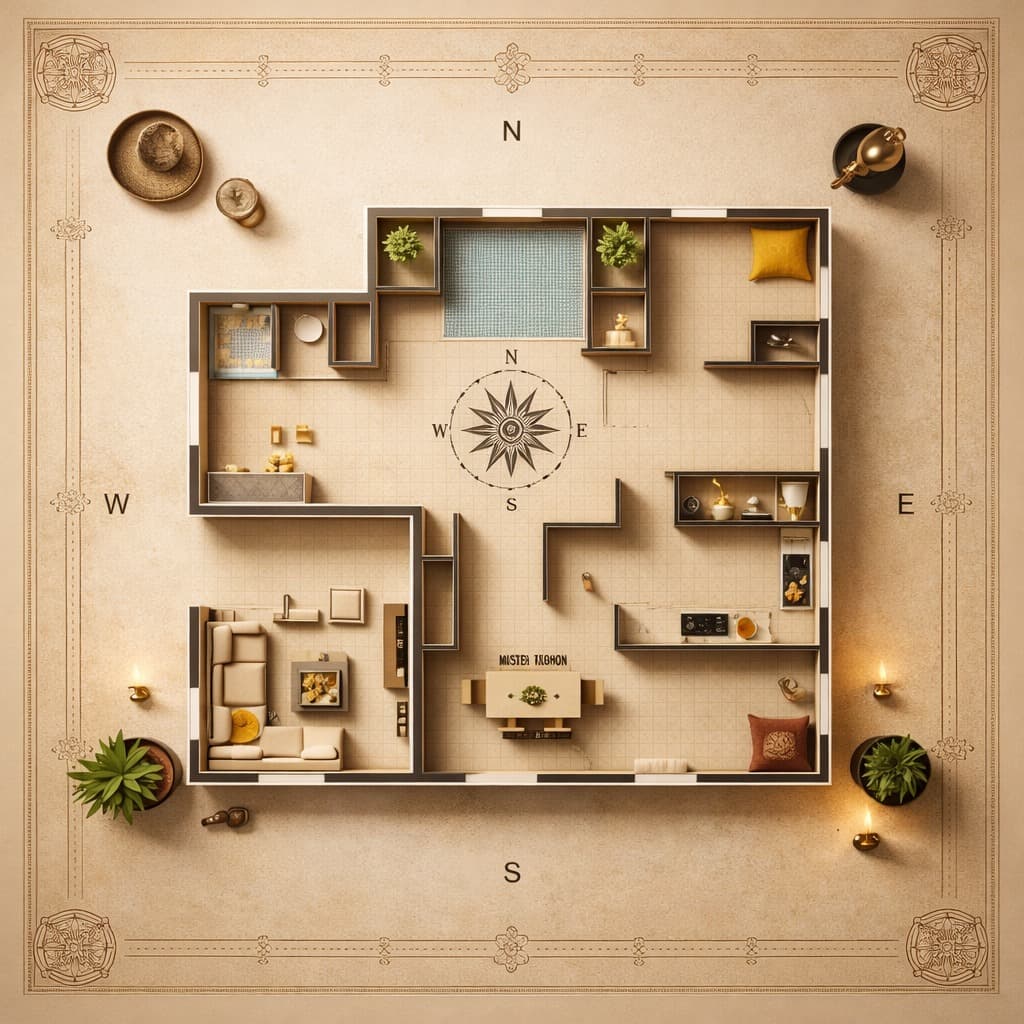
Vastu is built around balancing five natural elements in a space. When these elements work together, you get a living environment that just feels right.
Earth (Prithvi)
Southwest
Brings strength and stability—usually linked to the southwest.
Water (Jal)
Northeast
Represents flow and cleansing—often placed in the northeast.
Fire (Agni)
Southeast
Symbolizes energy and transformation—found in the southeast.
Air (Vayu)
Northwest
All about movement and circulation—goes with the northwest.
Space (Akash)
Center
Stands for openness and balance—centered in the heart of the building.
Why Vastu Matters
Benefits of Vastu-Compliant Design
People love Vastu-based design because it's thoughtful and balanced. Sure, some of it comes from tradition, but plenty of Vastu ideas actually line up with sustainable, practical design.
01
Better Sunlight & Airflow
Thoughtful orientation maximizes natural light and cross-ventilation throughout your home.
02
Smarter Interiors
Vastu-guided layouts lead to more organized, functional spaces that just work better.
03
Genuine Comfort
Spaces designed with Vastu feel genuinely comfortable—balanced and welcoming every day.
04
Natural Balance
A natural, balanced vibe throughout your home that promotes harmony and well-being.
05
Positive Environment
A home or office that feels positive and welcoming to everyone who enters.
Room-Wise Guidelines
Vastu for Every Room in Your Home
Each zone of your home carries a specific energy. Our expert approach ensures every room is positioned for maximum harmony and function.
North or East
Living Room
The living room’s where everyone comes together, so it needs to feel bright and welcoming. North, east, or northeast work best. Let in as much natural light and fresh air as you can.
Southeast
Kitchen
Think of the kitchen as the heart of the home—fire and energy. It fits best in the southeast. Put the stove facing east, and keep the sink away from the stove.
Southwest
Master Bedroom
If you want stability and peace, the southwest is the spot for your main bedroom. Put the bed so your head faces south or east. Calm, soothing shades make the space restful.
West or Northwest
Children’s Bedroom
Kids do well in the west or northwest—both help with growth and creativity. Set the study table to face east or north. Keep the room light and airy.
East or North
Study / Home Office
To boost concentration and learning, pick the east or north for a study room or home office. Sit facing east or north while you work.
Northwest or West
Bathroom
Bathrooms need good ventilation and careful placement to keep things clean and balanced. Northwest or west is ideal.
Northeast
Pooja Room
The northeast is the most sacred space for worship. Keep this area quiet, clean, and clutter-free. Soft lighting and gentle colors help create a peaceful mood.
East or West
Dining Room
Dining rooms feel best in the east or west. Family should ideally face east while eating. Keep the dining area close to the kitchen.
South / West / Southwest
Staircase
Staircases move energy between floors. Put them in the south, west, or southwest—not in the center. They should rise clockwise.
Northwest or North
Parking / Garage
For parking, northwest or north is best. Make sure the garage doesn’t block the main entrance. Keep it clean, organized, and well-lit.
North / East / Northeast
Garden & Landscape
Gardens bring balance and nature into your home. Plant small plants in the northeast, taller trees in the south or west. Water features are great in the northeast.
Northwest or West
Septic & Water Tank
For septic tanks, northwest or west is ideal. Place underground water tanks in the northeast, and overhead tanks in the southwest.
North / East / Northeast
Balcony & Terrace
Balconies and terraces are for fresh air and light. Keep these spaces open, bright, and tidy. Add plants or seating for a relaxing touch.
Plot Selection
Choosing the Right Plot
Getting the plot right is a big deal in Vastu. These key factors guide our pre-construction site assessment.
Shape of the Plot
Go for square or rectangular plots—they make layouts easier and keep the design balanced.
Slope & Gradient
A gentle slope to the north or east is best, and it helps with drainage too.
Surrounding Environment
Open space in the north or east is ideal. Stay away from heavy industry or noisy spots.
Facing Direction
East and North-facing plots are highly auspicious. South and West-facing plots require additional Vastu remedies.
Main Entrance
The Gateway of Positive Energy
The main door is more than just an entry—it's how energy and people flow in. A well-designed entrance just makes a home feel right, from the moment you walk in.
Face the entrance north, northeast, or east—these are the most auspicious directions.
Doors should open inward, symbolically welcoming positive energy into your space.
Keep the entry clean, bright, and clutter-free to allow smooth energy circulation.
The entrance should be the largest door in the house, and kept welcoming throughout the year.
Avoid placing shoes, garbage bins, or heavy objects directly in front of or behind the main door.
Pro Tip from JRM
A beautifully maintained entrance with good lighting follows Vastu principles while creating an unforgettable first impression — we design entrances that are auspicious and architecturally stunning.
Colors & Materials
Vastu-Approved Colors & Building Materials
The colors you pick and the materials you use really shape the mood of a room.
Recommended Colors
Light Yellow or White — For calm, peaceful spaces
Green — Works great in studies and offices
Blue — Perfect for bedrooms—relaxing and cool
Orange or Warm Tones — Add energy to kitchens and dining areas
Building Materials
Stone
For strength and durability
Wood
For warmth and balance
Brick or Clay
For a traditional, eco-friendly touch
Myths vs Reality
Common Vastu Myths Debunked
Separating fact from fiction — understanding the real science and universal applicability of Vastu Shastra principles.
Myth
You have to tear everything down for Vastu
Reality
Actually, you don’t need a total overhaul. Sometimes just tweaking the layout, moving some furniture, or changing up the lighting or colors can bring your place in line with Vastu ideas.
Myth
Vastu is just superstition
Reality
Sure, some parts are rooted in old beliefs. But you’ll find a lot of Vastu principles overlap with modern architecture—things like getting more sunlight, better airflow, and a sense of balance in your space.
Myth
Vastu is only for certain religions
Reality
Vastu Shastra isn’t about religion. It’s more of a set of architectural guidelines, so anyone can use its ideas when designing a home or office.
Myth
Modern buildings can’t follow Vastu
Reality
Even if you live in an apartment or a tight city space, you can still bring in plenty of Vastu elements with smart design choices.
Our Vastu Services
JRM Construction's Vastu Expertise
At JRM Construction, we help you bring Vastu principles into your space without losing out on modern style or comfort.
Pre-Construction Consultation
We’ll analyze your plot, help with orientation, and offer design tips before you even start building.
Get Consultation
Existing Building Assessment
If you’re already settled in, we’ll check out your place and suggest practical ways to align it with Vastu.
Book Assessment
Integrated Design Services
Our team creates plans that blend Vastu concepts with modern looks and real-world functionality.
View Architecture
Explore More
Related Services & Topics
Discover how JRM Construction combines Vastu principles with cutting-edge design across all our services.
Architectural Design Services
Discover how JRM Construction combines Vastu principles with cutting-edge architectural design to create spaces that are both beautiful and harmonious.
View Architecture Services
Sustainable Construction
Learn about our eco-friendly construction methods that align with Vastu’s emphasis on natural elements and environmental harmony.
Explore Sustainability
Vastu Shastra FAQs
Common questions about Vastu-compliant construction
Vastu Shastra is an ancient Indian architectural science that guides the design and layout of buildings to harmonize with nature. At JRM Construction, we blend these time-tested principles with modern construction techniques to create spaces that are both functional and balanced.
Read MoreNot at all. Many Vastu corrections can be made through simple adjustments like rearranging furniture, changing colors, improving lighting, or modifying the layout without any major structural changes.
According to Vastu, north, northeast, or east-facing entrances are considered most auspicious. The door should open inward, and the entryway should be kept clean, bright, and clutter-free.
Yes, Vastu principles can be adapted for apartments and modern spaces. Smart design choices like furniture placement, color selection, and room usage can align your flat with key Vastu guidelines.
Key placements include: Kitchen in the Southeast, Master Bedroom in the Southwest, Living Room in the North or East, Pooja Room in the Northeast, and Study/Office in the East or North.
Yes, we offer comprehensive Vastu services including pre-construction consultation, existing building assessment, and integrated design services that blend Vastu concepts with modern aesthetics.
Read More